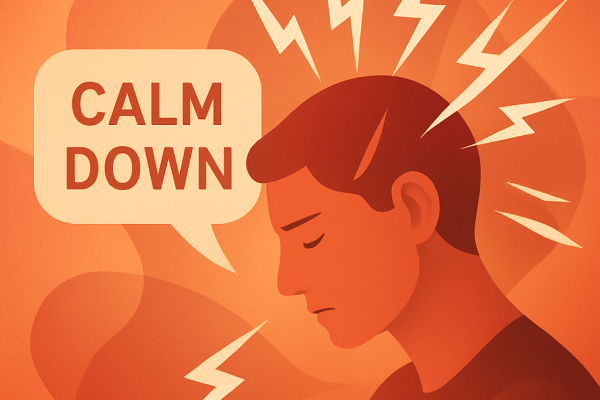
Why "Calm Down" Never Works (And What Does)
Your kid is having a meltdown. They’re crying, yelling, maybe throwing things. You’re tired. You’re maxed out. And you hear yourself say the two words that have never, in the history of parenting, actually worked:
“Calm down.”
Or maybe it’s your partner who’s upset. Or a team member who’s spiraling. Or you, standing in front of the mirror after a hard day, telling yourself to just relax.
And it doesn’t work. It never works. In fact, it usually makes things worse.
Here’s why: “calm down” is a demand your nervous system can’t meet when it’s dysregulated. Telling someone to calm down when their system is in fight, flight, or freeze is like telling someone with a broken leg to just walk it off. The instruction is irrelevant because the capacity isn’t there.
If you want to help someone regulate—or regulate yourself—you have to understand what’s actually happening in the nervous system. And you have to work with the body, not against it.
WHY “CALM DOWN” DOESN’T WORK
When someone is dysregulated, their nervous system has detected threat and activated a survival response. This isn’t a choice. It’s not something they’re doing to you. It’s an automatic, biological reaction designed to keep them alive.
Here’s what’s happening in the brain and body:
1. The prefrontal cortex goes offline.
The prefrontal cortex is the part of your brain responsible for rational thinking, impulse control, language processing, and perspective-taking. When your nervous system is activated, blood flow shifts away from this area and toward the survival brain (the amygdala and brainstem).
This is why your kid can’t “use their words” during a meltdown. This is why you can’t think clearly when you’re flooded. This is why logic doesn’t land when someone is activated. The part of the brain that processes logic isn’t online.
2. The body is flooded with stress hormones.
Cortisol and adrenaline are surging through the system. Heart rate increases. Breathing becomes shallow or rapid. Muscles tense. The body is preparing to fight, flee, or freeze.
You can’t think your way out of a neurochemical flood. Telling someone to “calm down” doesn’t change their biochemistry—it just adds shame to activation.
3. The nervous system needs to complete the stress cycle.
Activation isn’t something you can just turn off. The energy that’s been mobilized needs to move through the body. Trying to suppress it or bypass it doesn’t work. It just gets trapped—and shows up later as chronic tension, irritability, or shutdown.
4. “Calm down” implies they’re doing something wrong.
When you tell someone to calm down, the subtext is: Your reaction is too much. You’re out of control. You’re the problem.
This adds relational threat on top of whatever triggered the activation in the first place. Now they’re not just dysregulated—they’re also feeling judged, misunderstood, and unsafe with you.
WHAT YOUR NERVOUS SYSTEM ACTUALLY NEEDS
If “calm down” doesn’t work, what does? The answer depends on what state your nervous system is in.
Polyvagal theory (developed by Stephen Porges) identifies three primary nervous system states:
Ventral Vagal: Safe and Social
This is your optimal state. You’re calm, connected, and able to think clearly. Your prefrontal cortex is online. You can regulate your emotions, attune to others, and engage flexibly.Sympathetic: Fight or Flight
This is activation. Your body is mobilized for action. You might feel anxious, irritable, restless, or panicked. Your heart rate is up. Your thoughts are racing. You’re scanning for danger.Dorsal Vagal: Freeze or Shutdown
This is collapse. Your body has determined that fighting or fleeing won’t work, so it shuts down. You might feel numb, foggy, disconnected, or exhausted. You can’t access language or emotion. You just want to disappear.
The regulation strategy that works depends on which state you’re in. And trying to force someone from sympathetic activation or dorsal shutdown straight into ventral calm doesn’t work. You have to meet the nervous system where it is first.
WHAT TO DO INSTEAD: REGULATION STRATEGIES THAT ACTUALLY WORK
Here’s how to help someone regulate—or regulate yourself—based on what state the nervous system is in.
IF SOMEONE IS IN SYMPATHETIC ACTIVATION (FIGHT/FLIGHT):
Their system is mobilized. There’s energy that needs to move. Trying to make them sit still and “calm down” won’t work because their body is screaming to do something.
What works:
1. Movement
Let the energy move through the body. Jump up and down. Shake your hands. Go for a walk. Push against a wall. Rip up paper. Squeeze a stress ball.
This isn’t about “burning off energy”—it’s about completing the stress cycle so the activation can discharge.
2. Co-regulation through presence
Stay calm yourself. Don’t match their activation. Your regulated nervous system becomes a resource they can borrow from.
You don’t have to say much. Just: “I’m here. You’re safe. I’m not going anywhere.”
Your presence—calm, steady, non-reactive—signals safety to their nervous system. Over time, they’ll start to settle.
3. Validate the experience
Don’t dismiss what they’re feeling. Name it: “You’re really upset right now. That makes sense.”
Validation doesn’t mean agreeing with their behavior. It means acknowledging that their nervous system is responding to something real (to them), and that response makes sense given what their body is experiencing.
4. Offer grounding
Help them connect to the present moment. “Can you feel your feet on the ground? Can you name three things you see?”
Grounding brings the prefrontal cortex back online by engaging the senses and anchoring them in the here-and-now.
IF SOMEONE IS IN DORSAL SHUTDOWN (FREEZE/COLLAPSE):
Their system has gone offline. They’re not fighting or fleeing—they’re disappearing. They might seem “fine” on the surface, but internally, they’re collapsed.
Shutdown looks like:
Flat affect or numbness
Inability to make eye contact
One-word answers or total silence
Physical stillness or slumping
Disconnection from emotion
What works:
1. Gentle mobilization
You need to bring energy back into the system, but slowly. Activation collapsed into shutdown, so you don’t want to spike activation again—you want to gently wake the system up.
Try: stretching, gentle movement, humming, singing, or changing locations.
2. Connection without pressure
Don’t demand engagement. Just be near. Sit beside them. Offer light touch (if they’re okay with it). Let them know you’re there without requiring them to perform connection.
Say: “I’m right here. You don’t have to talk. I’m just going to sit with you.”
3. Help them come back to their body
Shutdown is a disconnection from the body. Help them reconnect by asking them to notice physical sensations.
“Can you wiggle your toes? Can you feel the chair under you? Can you take one deep breath?”
These tiny actions bring the nervous system back online without overwhelming it.
4. Don’t rush them
Coming out of shutdown takes time. Pushing them to “snap out of it” or “talk about it” will just send them deeper into collapse. Let them move at their own pace.
WHAT TO DO FOR YOURSELF WHEN YOU’RE DYSREGULATED
When you’re the one who’s activated or shut down, the same principles apply. But you also have the advantage of being able to intervene earlier—if you know your stress signature.
For activation (sympathetic):
Move your body (walk, stretch, shake)
Exhale longer than you inhale (activates the parasympathetic nervous system)
Put your hand on your chest and say out loud: “I’m activated right now. This will pass.”
Change your environment (step outside, splash cold water on your face, change rooms)
For shutdown (dorsal):
Gently mobilize (stand up, stretch, hum)
Engage your senses (smell something strong, taste something sour, listen to upbeat music)
Connect with someone safe (even just sitting near them helps)
Move slowly—don’t try to force yourself back online too fast
WHY THIS MATTERS FOR PARENTS AND LEADERS
If you’re parenting or leading, understanding nervous system states changes everything.
For parents:
When your kid is melting down, they’re not being manipulative or defiant. They’re dysregulated. Telling them to calm down adds shame and relational threat. But staying regulated yourself, offering movement, and validating their experience helps their nervous system settle.
For leaders:
When your team member is shutting down in meetings or snapping under pressure, they’re not being difficult. They’re in a nervous system state that’s incompatible with connection or clear thinking. Meeting them with curiosity instead of frustration, and giving them space to regulate, makes them more effective—not less.
You can’t logic someone out of a nervous system state. But you can co-regulate with them, meet them where they are, and help them find their way back.
ONE PRACTICE TO TRY THIS WEEK
The next time someone you care about is dysregulated—or you are—pause before saying “calm down.”
Instead, ask yourself:
What state is this nervous system in right now? Activation or shutdown?
What does this system need? Movement? Presence? Grounding? Time?
Then offer that.
You won’t get it perfect. But you’ll be working with the nervous system instead of against it. And that’s what actually helps.
WHY THIS MATTERS
“Calm down” doesn’t work because it’s not a nervous system intervention—it’s a demand. And demands don’t regulate people. Presence does. Movement does. Safety does.
If you want to help someone regulate, you have to meet their nervous system where it is. And that requires you to stay regulated yourself.
This isn’t soft. It’s neuroscience. And it’s the difference between escalating a situation and resolving it.
CITATIONS
Porges, S. W. (2021). Polyvagal Theory: A Science of Safety. Frontiers in Integrative Neuroscience. https://www.frontiersin.org/articles/10.3389/fnint.2021.727545
Dana, D. (2018). The Polyvagal Theory in Therapy: Engaging the Rhythm of Regulation. W.W. Norton & Company.
Siegel, D. J., & Payne Bryson, T. (2020). The Power of Showing Up: How Parental Presence Shapes Who Our Kids Become and How Their Brains Get Wired. Ballantine Books.
van der Kolk, B. (2014). The Body Keeps the Score: Brain, Mind, and Body in the Healing of Trauma. Viking.
